8 August 2016

VIRAL, Inaugural Issue of Technology | Architecture + Design

VIRAL, Inaugural Issue of Technology | Architecture + Design

VIRAL--the inaugural call for papers for TECHNOLOGY | ARCHITECTURE + DESIGN (TAD)--asks whether architecture is once again on the threshold of significant changes in the material, technical and procedural context of design. In the twenty-first century, information technologies are transforming how buildings are designed, constructed, delivered, occupied and assessed. From crowdsourcing to collective wisdom, information technology is redefining our relation to the environment and to each other. Yet, to what extent are architects, and those who educate them, actively involved in articulating a path for such technologies within their work—be it in their research, scholarship, or design work? Alternatively, to what extent are architectural educators cautious, resistant, or critical of this highly speculative engagement with barely recognizable or material forms of technology? 

TAD seeks contributions from scholars, educators, designers, and architects who research, test and create using these emerging technologies and who seek to articulate and theorize the impact they will have on the built environment. The journal seeks articles that feature primary research in information technologies and their impact on materials, construction, structures, building systems, energy studies, environmental design, sustainability and resiliency, project delivery, and practice-based innovations. Papers should advance scholarship with a focus on the impact, translation and integration of technology in architecture and design.


Submissions due 1 September 2016.

More information at the journal website.

Critical Collaborations: Neutralizing Power in Art and Design History

Critical Collaborations: Neutralizing Power in Art and Design History
15-18 February 2017, New York


We welcome submissions that look to histories of art and design collaboration that confront and disarm power structures, be they institutional, research methods-based, or material. This panel aims to foster a dynamic discussion that will address projects that focus on histories of collaboration and engagement practices. Contributions focusing on non-Western contexts will be favored to consider not what history or design mean in various constituencies, but what present collaboration across geographies can afford the intellectual, social and cultural aspects of art and design. 

Potential Subject Areas: 1) Art History-Decorative Arts/Textiles/ Design History; 2) Interdisciplinary-Museum Studies/Curatorial Studies/Art Criticism; 3) Interdisciplinary-Studio Art & Art History

Deadline for submission: 30 August 2016

Full call for papers and submission information: http://bit.ly/29orooj


Housing the Future – Resilient and Sustainable Design

Housing the Future – Resilient and Sustainable Design
9-10 February 2017, London South Bank University

As part of its book series on design and planning approaches to housing AMPS calls for submissions to the third book of the series. The Housing the Future series is a unique combination of: 
i. Built projects by planners, urban designers and architects
ii. Essays from academics in these fields describing theory, practice or educational design projects in these areas
iii. Student projects (typically those of the academics in section two)

Book title: Housing the Future – Resilient and Sustainable Design.

The first round of chapter submissions are collected through the housing strand of the 'Living Sustainability: An Environmental Critique of Design and Building Practices, Locally and Globally' conference.

LSBU Logo  AMPS - Architecture Media Politics Society

Abstract submission due 20 October 2016.

More information at the conference website.

The Politics of Environments: Architectures, Natures and Data


The Politics of Environments: Architectures, Natures and Data
20-23 April 2017, Tallinn

Authors are welcome to submit analytical papers, theoretically well-grounded case studies, or architectural counter-projects for presentations while indicating their preference for one of these tracks: 'Optimised urban ecosystems', 'Architectural turn to nature?' or '"Big data" and urban subjectification'.

More information on the conference themes available here: http://www.architecturesnaturesdata.com/

Proposals due 1 November 2016.

24 June 2016

Call for conference papers - June 2016

A Colloquium of Ficto-Critical Approaches to a Writing Architecture
5 August, 2016, Brisbane

http://architexturez.net/pst/az-cf-179240-1466433067

"This colloquium brings ficto-criticism together with experimental approaches to architecture as a world-making or constructive practice.  Ficto-criticism is a method that innovatively combines the disciplines of architecture, philosophy and literature in order to enable both the critique of, as well as speculative explorations of world-making practices (Gibbs 2005; Meuke 2002)... This colloquium will take the form of twenty minute presentations - either manifesting or reflecting on methods of ficto-critical writing in architecture - followed by extended discussion and 'readings' by other participants"

Submission of abstracts: 8 July 2016


----


Emerging Practices Design Research and Education Conference 2016: Design in Complexity 
15-16 October, 2016, Shanghai

http://tjdi.tongji.edu.cn/NewsDetail.do?ID=4069&lang=_en


"EPC2016 encourages all contributions that take designing for complexity as a starting point of long-term and profound systemic transformation.  Grounded in emerging or ongoing cases, as well as cases in the planning stage, EPC2016 aims to bridge the gap between design research and real world changes.  This involves careful consideration of how we can change the current situations into preferred ones.  We especially welcome cases from industry and professional design practice."

Submission of case proposals: 15 July 2016

----


New Directions in Film-Architecture  
1-2 December, 2016, University of Newcastle, Australia


"This symposium seeks to do two things: first, to chart this history from both disciplinary perspectives and their sometime mutual engagement, in the process offering rejuvenation; and second, to suggest new directions for research in this area, taking on both historical and recent developments in the relationship between film and architecture.  We are seeking symposium papers that go beyond citing the representation of famous architecture and built environments on film, and instead look at the mutual impact of each art form and their scholarly analysis."

Submission of abstracts: 15 July 2016


23 June 2016

New books in the library - June 2016


Product Details

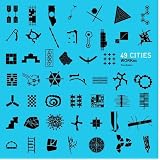
"Throughout history architects and planners have dreamed of "better" and different cities - more controllable, more defensible, more efficient, more monumental, more organic, taller, denser, sparser or greener...49 Cities is a call to re-engage cities as the site of radical thinking and experimentation, moving beyond "green building" toward an embrace of ideas, scale, vision and common sense combined with delirious imagination in the pursuit of empowering questioning and re-invention."


----


Product Details

"The mid-twentieth century was one of the most popular, collectable and dynamic periods of international design. Drawing on the inventive style of the era, this range... features exclusive illustrations of iconic mid-centruy desings, from Eames chairs to Poul Henningsen lamps and George Nelson clocks, all rendered in a distinctive graphic style."

----


Product Details


Library News - June 2016

Swanston Library closure: 27-28 June


Swanston Library will be closed on Monday 27 June and Tuesday 28 June for essential NAS building works.  


Carlton Library in Building 94 will be open 8am-5pm both days. Alternative study space on campus can be found at www.rmit.edu.au/students/space

We are sorry for the inconvenience.


----

A better way to find e-books in LibrarySearch

As well as print books, RMIT University Library provides access to thousands of e-books across must subject areas. Finding them has not always been simple. In order to improve access to e-books we have introduced a new, simpler way to find them.


How to find e-books in LibrarySearch


3 June 2016

Call for journal papers - June 2016


Special issue of Fabrications: Tropical zone: people, practices and pedagogies


"This issue of Fabrications invites contributors to address the theme of the tropical zone as an architectural construct created and disseminated by a range of actors including educators, practitioners and their clientele, and state and institutional networks... This issue is also open to papers that discuss how an understanding of the tropical zone relates to green architecture and new techno-scientific building processes, both in terms of aesthetics and politics"

Submission deadline for intention to contribute:  20 June 2016


----


Special issue of CoDesign: Unfolding participation over time in the design of I.T.

http://filsalustri.blogspot.com.au/2016/05/special-issue-of-codesign-unfolding.html


"The theme of this special issue is participation in the design of information technology (IT). The aim is to continue and contribute to the debate around the notion of participation in Participatory Design and participatory Human Computer Interaction (HCI) research"

Submission deadline for intention to contribute:  15 July 2016


----

Special issue of OASE: Narrating urban landscapes


"Today, a new type of redevelopment is high on the agenda: that of suburban areas around or between cities. Built mainly in the post-Second World War period, these urban landscapes are subject to far-reaching demographic changes and development pressure, especially because most city centres and the ... post-productive landscapes are becoming fully developed. However, suburban areas often seem to lack the site-specificity and the history of inner cities and brownfields...

We are looking for two types of contributions. First, we invite contributions of/on (landscape) architects and urban planners using a narrative approach in analysis and design today. Which techniques are used, and how are they brought into practice? Second, we invite theoretical and/or historical reflections, taking the exploration of the experiential and narrative aspects of urban landscape in history as a starting point for a critical reflection. Who constructs the narrative, how and why? How does the narrative relate to power relations? Can narrativity provide a way of conceiving of subject-object, reader-writer as active relationships instead of as opposites?"

Submission deadline for intention to contribute: 15 July 2016


----


Special issue of Interstices: Return to origins

http://interstices.ac.nz/call-for-journal-papers-2/


"Interstices: Journal of Architecture and Related Arts invites submissions for issue 17 of the journal due for publication in late 2016.  Authors may submit academic or practice-oriented, fully written as well as visual, contributions for this issue.  While there is no specific thematic, for the first time since Issue 01, authors may choose to focus on the issue's sub-theme, Return to Origins, when considering submissions..."

Submission deadline for intention to contribute:  8 August 2016


----


Special issue of Architecture and Culture: Architecture and capitalism - solids and flows


"The aim of this issue of Architecture and Culture is to revisit the relationship between architecture and capitalism, not by reverting back to 'critique', 'post-criticality' or even 'resistance', but from an outset of addressing their complex relationality"

Submission deadline for intention to contribute:  1 September 2016

----


Special issue of Art, Design & Communication in Higher Education: territories of graphic design education


"Art, Design & Communication in Higher Education, in collaboration with The Graphic Design Educators' Network, invites contributions to 'Territories of Graphic Design Education', a special issue exploring the physical, intellectual and existential terrain of graphic design, learning and teaching.  There is an orchestrated chorus within design education for problems to be discovered, defined and solved based on evidence.  How does graphic design education its prospective practitioners to discover, define and solve problems?... Any mode of enquiry is encouraged that surfaces, shares or questions graphic design education's traditions and history; status and identity; spaces and environments; institutions and politics; being and knowing; and practices and pedagogies..."

Submission deadline for intention to contribute:  24 October 2016