17 July 2017

TAD - call for papers

TAD (TECHNOLOGY | ARCHITECTURE + DESIGN) seeks original research from scholars, practitioners, architects, scientists, and engineers who engage with technology, architecture, and design. Empirical, theoretical, and practice-based research representing a broad array of methodologies is welcome.


Submission deadline August 1, 2017
Open represents inclusion, exploration, and open-mindedness. With this issue of TAD, we direct this receptivity towards research and creativity in the varied work of our contributors. The TAD mission engages numerous fields including emerging materials, information and building technologies, and history and theory of technology. These specializations encapsulate the physical world, dominant technologies of our era, and ways to understand both. Open is a platform for those conducting research in any of these areas, while simultaneously asking researchers to make connections between their investigations and practice, between empirical and design research methods, or between professional

West Michigan Graphic Design Archives

The Archives makes both physical artifacts and digital representations available to design professionals, educators, students, business people, researchers, and others interested in the rich legacy of graphic design, paper manufacturing, and printing in West Michigan.

Digital representations span the 1940s to 2010s.

Library Poster by designer Jovaney Hollingsworth

DESIGNER Jovaney Hollingsworth
CREATIVE DIRECTOR Charles S. Anderson
FIRM Charles S. Anderson Design
CLIENT French Paper
COPYRIGHT CSAIMAGES.COM

12 July 2017

Object Subject - inaugural national design writing conference

10-11 November 2017
Shine Dome, Canberra

Exploring the way design speaks to us, and the way we speak about design, the inaugural national design writing conference will be held at Roy Grounds’ iconic 1959 Shine Dome as a signature DESIGN Canberra event. For the first time, designers, writers, critics, bloggers, researchers, collectors, makers, curators and design lovers will come together to explore the creative and important ways that writing has become essential to the future of design.

The conference will take place during the DESIGN Canberra festival, which celebrates and promotes Canberra as a global city of design, transforming the nation’s capital into a new platform for experimentation and design. 

CALL FOR SPEAKER PROPOSALS
Calling designers, writers, bloggers, publishers, researchers, collectors and design lovers. Object Subject will explore the way design speaks to us, and the way we speak about design.

It begins with a premise that writing is essential to the future of design – promoting understanding, providing reflections, interpreting the past and imagining the future – but extends to a broader consideration of design practice as cultural and artistic language. Object Subject is a new platform to explore and respond to emerging changes, current issues and promised opportunities within the sector, to develop new audiences and bridge scholarly and popular writing in a digital age.

Presentation types
We welcome proposals for presentations in a range of accessible and more formal formats.

6 July 2017

New books in the library July 2017


A few new books in the library are listed below. You can also see a list of recent print additions to the library (the list is sorted by dewey decimal number - the most relevant areas for the school of architecture & design might be 307, 711-729, 745, 747 and 749). Also, to search for new books by topic, try your search, refine the results to books and order by publication date - e.g., urban design.

Please send any purchase suggestions to Tristan, or Vivian at the Brunswick library for Graphic Design.


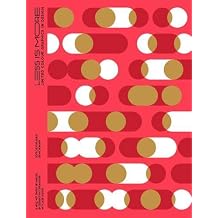
Product Details
"Less in More collates about 120 projects that use only a few colours to attract the eye. In three chapters, categorised by the number of colour inks applied, these creative solutions or visual experiments represent a refreshing departure from mainstream designs that play with selective colour formulations, materials, special printing and graphic details and make a unique appeal. They are tailored for clean and effective brand identities, packaging designs, publications and events, large and small. Whether it is for affordability, visual economy, a non-existing colour stock, or a tribute to modernist art, it is a proof that designs can speak more with less"


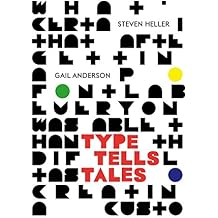
Product Details
Type tells tales
" 'Type Tells Tales' focuses on typography that is integral to the message or story it is expressing. This is type that speaks - that is literally the voice of the narrator. And the narrator is the typographer. This can be quite literal, for example when letters come from the mouth of a person or thing, as in a comics balloon. It can be hand lettering, drawn with its own distinctive peculiarities that convey personality and mood... Seeking out examples in the furthest reaches of graphic design, Steven Heller and Gail Anderson uncover work that reveals how type can be used to render a particular voice or multiple conversations, how letters can be used in various shapes and sizes to create a kind of typographic pantomime, and how type can become both content and illustration as in, for example Paul Rand's 'ROARRRRR' "


3rd issue of 'Dialectic', a scholarly journal of thought leadership, education and practice in the discipline of visual communication design

Authors are invited to submit works for the THIRD issue of Dialectic, a biannual journal devoted to the critical and creative examination of issues that affect design education, research, and inquiry. Michigan Publishing, the hub of scholarly publishing at the University of Michigan, is publishing Dialectic on behalf of the American Institute of Graphic Arts (AIGA) Design Educators Community (DEC). The third issue will be published between November 15 and December 31, 2017.

Dialectic’s third issue seeks papers and visual narratives that highlight and explore convergences focusing on design-led interdisciplinary scholarship, inventive teaching, and transformational activities. This thematic outline is purposefully aligned with the

Beyond Change: Questioning the role of design in times of global transformations

Second SDN Design Research Winter Summit 2018 
at the FHNW Academy of Art and Design Basel
8-10 March 2018


Present discourses in design research, art, cultural studies, media studies, philosophy, and social science are dominated by the much-debated concept of the ‘Anthropocene,’ which supposedly elicits a heightened sensitivity for the negative impact that anthropocentric policies and technologies continue to have on our planet, and thus on the terms and conditions of humanity’s long-term survival. Against the backdrop of catastrophe and

Interstices journal of architecture & related arts

Surface and ornament are periodically reviewed, discarded and pursued. More recently, there has been an interest in the writing of Aby Warburg, Alois Riegl, Gottfried Semper, Adolf Loos, Hermann Muthesius, and Le Corbusier. They have been made prominent by issues of animation (see, for example, Papapetros 2012, Payne 2013, van Eck 2014) and digitation (see for example Spuybroek 2008 and Schumacher 2009).

Incrustations, protuberances, textured expressions, smoothed surfaces, surfaces enlivened as screens – are they ornament or cladding? The forthcoming issue of Interstices: Journal of Architecture and Related Arts, “Surface/Pattern”, pursues the tension between ornament,

Interventions / Adaptive Reuse: Design Intervention to an Existing Construct(s) as ACT

Established in 2009 as the first American academic publication focusing on Design and Adaptive Reuse, the Int|AR Journal explores this inherently sustainable practice through multi-faceted investigations and paradigmatic examples. Encompassing issues of preservation, conservation, alteration and interventions, each peer-reviewed issue offers broad but distinct viewpoints on a single topic.

We live in a time characterized by violence, racism, inequality, supremacy, ignorance.  These actions prompt responses, daily and globally, from Tweets to boycotts, but also kindness and unintended