28 June 2019

New Books June-July 2019

See below for a selection of new library books, including some more exhibition catalogues from the Venice Architecture Biennale. Also, see New Books in the Library for other recently added titles. The most relevant call numbers for Design, Architecture, Interior Design, Landscape Architecture, Urban Design will be around 307, 711-729, 745, 747 and 749. You can also search for books on your topic in LibrarySearch and use the "New Records" option to refine your results to the last week, month, or 3 months.

Fred Ward: Australian pioneer designer, 1900-1990

This fascinating biographical narrative describes how Fred Ward, a pioneer Australian furniture designer, tried to show from the 1930s onwards how good design was the missing factor in industry, commerce, the bureaucracy, education and the diplomatic corps. He believed that apathy, ignorance, misunderstanding, and possibly our geography, eventually undermined design’s potential benefits to everyone. There are lessons for the future in this story as he clearly explains how a man with vision proved through a lifetime of example that science and art can enhance our lives through the useful art of furniture.

Bauhaus women: a global perspective /

Forty five key women of the Bauhaus movement.0Bauhaus Women: A Global Perspective reclaims the other half of Bauhaus history, yielding a new understanding of the radical experiments in art and life undertaken at the Bauhaus and the innovations that continue to resonate with viewers around the world today. 0The story of the Bauhaus has usually been kept narrow, localized to its original time and place and associated with only a few famous men such as Walter Gropius, Marcel Breuer, Paul Klee, Wassily Kandinsky, and Laszlo Moholy-Nagy. 0Bauhaus Women: A Global Perspective bursts the bounds of this slim history by revealing fresh Bauhaus faces: Forty-five Bauhaus women unjustifiably forgotten by most history books. This book also widens the lens to reveal how the Bauhaus drew women from many parts of Europe and beyond, and how, through these cosmopolitan female designers, artists, and architects, it sent the Bauhaus message out into the world and to a global audience.

Bauhaus journal 1926-1931: facsimile edition

One hundred years after the founding of Bauhaus, it's time to revisit Bauhaus journal as a significant written testimony of this iconic movement of modern art. In this journal, published periodically from 1926 to 1931, the most important voices of the movement are heard: masters of the Bauhaus, among others, Josef Albers, Walter Gropius, Wassily Kandinsky, Paul Klee, László Moholy-Nagy, and Oskar Schlemmer, as well as Herbert Bayer, Marcel Breuer, Ludwig Mies van der Rohe, Gerrit Rietveld and many more. They address the developments in and around the Bauhaus, the methods and focal points of their own teaching, and current projects of students and masters. At the time primarily addressed to the members of the"circle of friends of the Bauhaus," the journal published by Gropius and Moholy-Nagy makes tangible the authentic voice of this mouthpiece of the avant-garde. The facsimile reprint is intended to give new impetus to international discussion and research on the Bauhaus, its theories and designs.
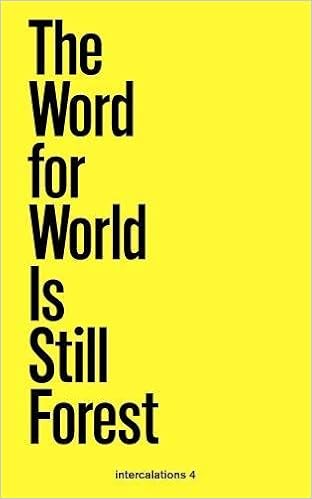
The word for world is still forest

The Word for World is Still Forest creates a space for the reader-as-exhibition-viewer to consider how forests may be seen not only for their trees, but also how they can enable experiences of elegance, affirmation, and creation for a multitude of creatures. in response to their violent destruction, which characterizes the Anthropocene, these pages traverse various woodlands by way of their semiotic, socio-political, historical, and epistemic incitements in order to reveal how practices of care, concern, and attention also enable humans to inhabit and flourish in this world as forest.
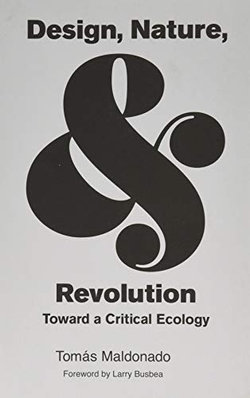
Design, nature, and revolution : toward a critical ecology

TWhat good is design? In a world facing social unrest, political tribalism, and impending ecological doom, Tomás Maldonado poses philosophical inquiries into the role design plays during a moment of crisis and analyzes what “design” might mean as an ever-enlarging compass beyond stylization of specific objects. He discusses how design is both influenced by and central to ecological crisis. Written as a kind of obituary to the Modern movement’s wave of failed “concrete utopias,” Maldonado combines philosophy, sociology, radical countercultural thought, and the ecological sciences into a polemic that recenters design in the human environment.
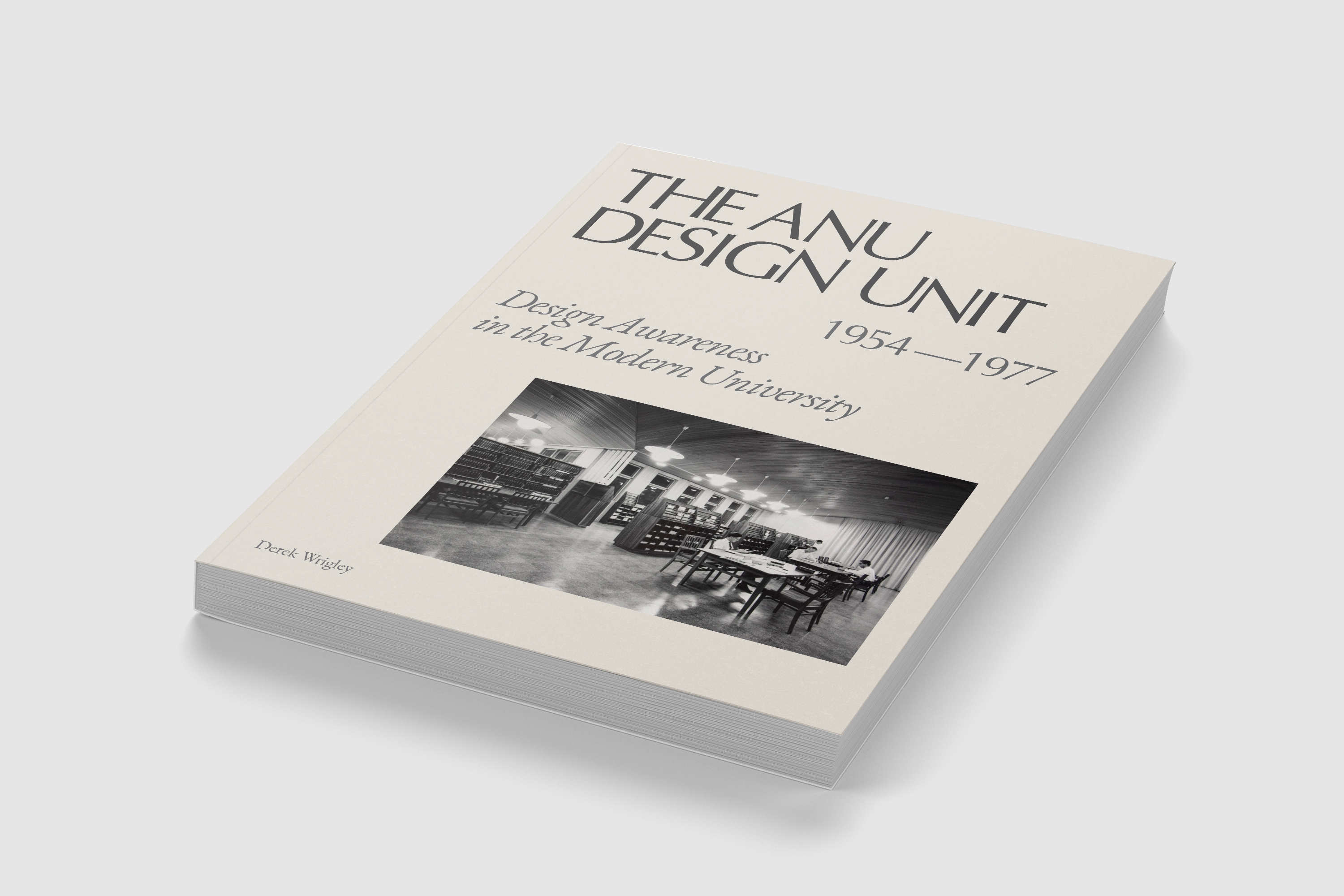
The ANU Design Unit 1954-1977: Design Awareness in the Modern University

The ANU Design Unit was first established in 1954 to design and manufacture furniture for a steadily growing Australian National University. From 1962 ahead of a rapid expansion of the campus, the Design Unit, under the helm of Derek Wrigley as University Designer and Architect, embraced a concept of ‘total integrated design’. This vision proposed a cohesive approach to architecture, urban planning, furniture, interiors, landscaping and graphic design across the campus’ learning and research environment. This book, which accompanies an exhibition of the same name at Canberra Museum and Gallery, ells the story of ANU embracing the concept of 'total' design, from furniture, to landscaping, interior, industrial, architectural and graphic design for a cohesive and functional campus aesthetic.

Participatory Design Conference


15-19 June 2020 | Location: Universidad de Caldas, Manizales, Columbia


The Participatory Design Conference (PDC) has a long history in bringing together research concerned with the direct involvement of people in co-design, development, implementation, and appropriation activities around technologies, spaces, artefacts, and services. The conference invites researchers and practitioners working on participatory design, as it is encountered and discussed in multiple fields.

In 2020, the 18th Biennial Participatory Design Conference (PDC) will be held in Manizales, Colombia, for the first time in South America. The conference will be held in conjunction with the Festival de la Imagen 2020, one of the largest and most recognized design events in Colombia, which will bring a variety of unique possibilities and encounters for PDC and its community.

Theme: “Participation(s) otherwise”
Since Participatory Design’s (PD) emergence as a research community, PD scholars have asserted that design is a practical, social and political endeavour. Main commitments include: offering alternative technologies, rendering design processes democratic, open and accessible to wide participation, and amenable to critical scrutiny and mutual learning. By

Craft Research Special Issue: Crafting Health, Wellbeing and Happiness (Sep 2019)


Today, with the advent of leisure time, growth in aging populations, and medical and technological advances, the crafts have become more multi-layered than ever, with applications in areas well beyond traditional contexts.

Craft practice is recognized as a positive influence on personal and communal wellbeing when used as a leisure and social activity. The crafts involve makers working individually and/or coming together in the home, studio, community, or even on public transport, e.g. the Circle Line project. Hands-on workshops in art galleries or craft activism support a ‘making together’ approach on a local and global scale. Initiatives such as the Great British Bake Off, (Pottery Throw etc.) and their international equivalents, represent a shared understanding of the enjoyment to be found in amateur and professional skills exchange, social interaction, cohesion and support, which benefit participants’ wellbeing to varying

AIS Design / Storia e Ricerche - design history journal (July 2019)


Website: AIS Design
Deadline for submission of abstracts: 15 July 2019

Theme: Social Design. Design and the "common good".

This call dedicated to social design, in its most various forms (product, service, communication and theory), therefore intends to collect contributions with a historical-critical viewpoint that highlight:
  • Which were the most discussed design fields and projects concerning "common good” in Italy;
  • What kind of relationships had the Italian projects in the international arena;
  • Which cases can be considered as founding acts of contemporary social design;
  • The possibility of defining historiographies and geographies of social design at an Italian and/or international level;
  • The actual existence, or not, of a "public utility graphic design" and of its legacy;
  • Which design practices are historically ascribable to the fields of reflection, research and experimentation and which ones had a practical impact on policies and production;
  • Testimonies, contributions, debates which can be defined as the foundations of social design.


All submissions (both by invitation and in response to the call) are subject to blind peer-review.

Deadlines are as follows:
 July 15, 2019: abstract submission; contribution proposal must be based on the types

PAD#17 | PAD: Paesaggio – Arte – Design (July 2019)


Website: PAD
Deadline for submission of abstracts: 15 July 2019

Guest Editors: Anna Mazzanti and Matilde Marzotto Caotorta.

This call for submissions refers to the journal acronym (PAD. Pages of Art and Design), that also stands for the topic chosen: Landscape (Paesaggio in Italian), Art and Design.

The topic focuses on:
  • how the landscape is a cross between art and design?
  • landscape can be a stage in which a work of art is produced or a background for the interaction between art and design;
  • what is the landscape for a designer and what is it for the artist?
  • how physical and virtual Mediterranean landscapes can be enhanced?
  • it is also asked focus on the representation of the landscape: from cartography to maps, from communication to visual identity.


The two point of views, both that of the artistic heritage and that of the designer, grow up at the Department of Design at the Politecnico di Milano. The department consists of a very interdisciplinary environment in which a varied group of scholars researches from the project to the cultural heritage, from processes to historical aspects. Then this call for paper refers to scholars in humanistic studies as well as design studies. We are interested in texts that focus on a theoretical, aesthetic, and critical approach as well as on projects associated with the contemporary Mediterranean landscapes. Our focus is on water, the coast, the routes,

Journal of Arts and Communities


Special Edition: Stitching Together
This special edition of the Journal of Arts and Communities arises from the Stitching Together project, funded by an AHRC research networking grant. The Stitching Together project brings together researchers, project commissioners, professional textile practitioners and enthusiast maker groups to open critical dialogue around research and practice using participatory textile making methods. The familiarity of textile making processes such as sewing and knitting means these activities are accessible to participants and researchers in varied contexts across a range of disciplines. Researchers using participatory textile making activities are gaining rich insights into questions of artistic, scientific, social, material and cultural value.

The aim of this special edition is to provide a collection of reflective case study articles that both document and critically examine methods and approaches to using participatory textile making within diverse research contexts. The Call for Contributions is extended to researchers using participatory textile making practices in research areas including, but not confined to:
  • craft practice
  • sustainable development
  • healthcare and well-being
  • learning
  • activism
  • community
  • identity


The special edition offers an opportunity to reflect on issues including the ethical dimensions of participatory making; the immaterial qualities of making together; possibilities for and

Cubic Journal: Design Education Issue


Theme: Design Education - Technology’s Role in Reforming Design Education| Pedagogy - Critique - Transformation

Issue Editors: Jae-Eun Oh (POLYU), Sharon Poggenpohl (POLYU)

Can technologies transform and reform design education? Can online learning replace face-to-face tutorials across different design disciplines and their education processes? How can technological development today help studio-based learning take place in virtual space? Importantly, how should design educators adapt to the new (technological) direction this era is facing?

Issue 4 on Design Education seeks inspiring and thought-provoking contributions that may provide further insight into the questions raised as a response to uncovering the area / influences / consequences of technologies in design education. The call is open to contributions from a wide range of disciplines and fields related to education. This may include product design, spatial design, graphic design, game design, fashion design, communication design, advertising design, digital interactive design, film (live action and animation) media studies, architecture, design theory as well as art education and many
other sectors. This issue, therefore, encourages contributions that reposition design education and design research, and that fills the evident gaps as well as generates other and new forms of knowledge that have been overlooked.

Contributions will be academically positioned papers up to 5,000 words that exemplify research-based exploration in the domain of design education. All contributions will be double blind peer reviewed.


Submissions are to follow submission criteria as described on the cubicjournal.org website. Final submissions must be made by 6 July 2019 at 12 noon, Hong Kong time to jae.oh@polyu.edu.hk and editors@cubicjournal.org.