28 June 2019

PAD#17 | PAD: Paesaggio – Arte – Design (July 2019)


Website: PAD
Deadline for submission of abstracts: 15 July 2019

Guest Editors: Anna Mazzanti and Matilde Marzotto Caotorta.

This call for submissions refers to the journal acronym (PAD. Pages of Art and Design), that also stands for the topic chosen: Landscape (Paesaggio in Italian), Art and Design.

The topic focuses on:
  • how the landscape is a cross between art and design?
  • landscape can be a stage in which a work of art is produced or a background for the interaction between art and design;
  • what is the landscape for a designer and what is it for the artist?
  • how physical and virtual Mediterranean landscapes can be enhanced?
  • it is also asked focus on the representation of the landscape: from cartography to maps, from communication to visual identity.


The two point of views, both that of the artistic heritage and that of the designer, grow up at the Department of Design at the Politecnico di Milano. The department consists of a very interdisciplinary environment in which a varied group of scholars researches from the project to the cultural heritage, from processes to historical aspects. Then this call for paper refers to scholars in humanistic studies as well as design studies. We are interested in texts that focus on a theoretical, aesthetic, and critical approach as well as on projects associated with the contemporary Mediterranean landscapes. Our focus is on water, the coast, the routes,

Journal of Arts and Communities


Special Edition: Stitching Together
This special edition of the Journal of Arts and Communities arises from the Stitching Together project, funded by an AHRC research networking grant. The Stitching Together project brings together researchers, project commissioners, professional textile practitioners and enthusiast maker groups to open critical dialogue around research and practice using participatory textile making methods. The familiarity of textile making processes such as sewing and knitting means these activities are accessible to participants and researchers in varied contexts across a range of disciplines. Researchers using participatory textile making activities are gaining rich insights into questions of artistic, scientific, social, material and cultural value.

The aim of this special edition is to provide a collection of reflective case study articles that both document and critically examine methods and approaches to using participatory textile making within diverse research contexts. The Call for Contributions is extended to researchers using participatory textile making practices in research areas including, but not confined to:
  • craft practice
  • sustainable development
  • healthcare and well-being
  • learning
  • activism
  • community
  • identity


The special edition offers an opportunity to reflect on issues including the ethical dimensions of participatory making; the immaterial qualities of making together; possibilities for and

Cubic Journal: Design Education Issue


Theme: Design Education - Technology’s Role in Reforming Design Education| Pedagogy - Critique - Transformation

Issue Editors: Jae-Eun Oh (POLYU), Sharon Poggenpohl (POLYU)

Can technologies transform and reform design education? Can online learning replace face-to-face tutorials across different design disciplines and their education processes? How can technological development today help studio-based learning take place in virtual space? Importantly, how should design educators adapt to the new (technological) direction this era is facing?

Issue 4 on Design Education seeks inspiring and thought-provoking contributions that may provide further insight into the questions raised as a response to uncovering the area / influences / consequences of technologies in design education. The call is open to contributions from a wide range of disciplines and fields related to education. This may include product design, spatial design, graphic design, game design, fashion design, communication design, advertising design, digital interactive design, film (live action and animation) media studies, architecture, design theory as well as art education and many
other sectors. This issue, therefore, encourages contributions that reposition design education and design research, and that fills the evident gaps as well as generates other and new forms of knowledge that have been overlooked.

Contributions will be academically positioned papers up to 5,000 words that exemplify research-based exploration in the domain of design education. All contributions will be double blind peer reviewed.


Submissions are to follow submission criteria as described on the cubicjournal.org website. Final submissions must be made by 6 July 2019 at 12 noon, Hong Kong time to jae.oh@polyu.edu.hk and editors@cubicjournal.org.

24 April 2019

New books - April/May

See below for a selection of new library books, including some more exhibition catalogues from the Venice Architecture Biennale. Also, see New Books in the Library for other recently added titles. The most relevant call numbers for Design, Architecture, Interior Design, Landscape Architecture, Urban Design will be around 307, 711-729, 745, 747 and 749. You can also search for books on your topic in LibrarySearch and use the "New Records" option to refine your results to the last week, month, or 3 months.

Spots in Shots: Narrating the Built Environment in Short Films

Spots in Shots is about short films that centre on stories about architecture and urban development. Whether documentary or fictional, stories give meaning to the built environment. Compared with conventional architectural representations, film has its own characteristic range of storytelling tools. In an exceptional interplay of moving pictures, text and sound, film can stir the audience's imagination, make people think and rouse their interest in the oeuvre of a designer. Spots in Shots is based on scientific research and extensive interviews with filmmakers. Which stories do they tell? What are their motives? How can film help improve the communication between architects and the general public? Which issues keep coming up during the creation, distribution and reception of the works? The book analyzes unique films that few people are familiar with. They deserve to be brought out of the shadows, because they acquaint us with the ideas, dreams and ideals of the designers behind architecture and urban design in unexpected ways and thus change the way we look at architecture.

Energy overlays: Land art generator initiative

Imagine a power plant that is also the perfect place to have a picnic. On the foreshore of St. Kilda, Australia rises just such a structure—one that merges renewable energy production with leisure, recreation, and education. This volume imagines a world where the infrastructures that power our cities are designed to be reflections of culture, where public parks provide clean electricity to the city grid, and where the art that brings depth and vibrancy to our lives also measurably responds to the challenges of climate change. Essays about the energy transition accompany beautiful renderings and diagrams of more than fifty designs that use renewable energy technologies to arrive at innovative, site-specific solutions. Energy Overlays provides a glimpse into a post-carbon future where energy infrastructure is seamlessly woven into the fabric of our cities as works of public art.

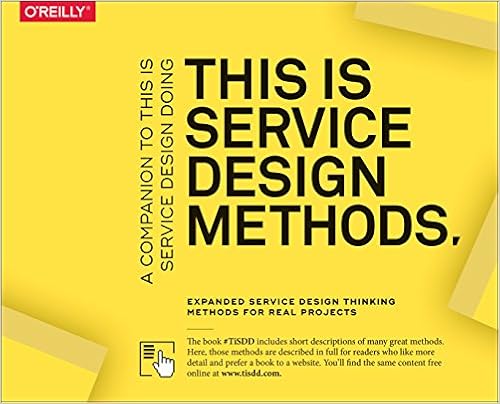
This is Service Design Methods: Expanded Service Design Thinking Methods for Real Projects

In this book, you'll find 54 hands-on descriptions that help you DO the key methods used in service design. These methods include instructions, guidelines, and tips-and-tricks for activities within research, ideation, prototyping, and facilitation. This is the print version of the method companion to the book This Is Service Design Doing (#TiSDD). It includes the same content that you can find free on the book website, tisdd.com, but nicely revisualized and presented in a professional bound format.

Mapping Society: The Spatial Dimensions of Social Cartography

From a rare map of yellow fever in eighteenth-century New York to Charles Booth’s famous maps of poverty in nineteenth-century London, an Italian racial zoning map of early twentieth-century Asmara, and a map of wealth disparities in the banlieues of twenty-first-century Paris, Mapping Society traces the evolution of social cartography over the past two centuries. In this richly illustrated book, Laura Vaughan examines maps of ethnic or religious difference, poverty, and health inequalities, demonstrating how they not only serve as historical records of social enquiry but also constitute inscriptions of social patterns that have been etched deeply on the surface of cities. The book covers themes such as the use of visual rhetoric to change public opinion, the evolution of sociology as an academic practice, changing attitudes to physical disorder, and the complexity of segregation as an urban phenomenon. While the focus is on historical maps, the narrative carries the discussion of the spatial dimensions of social cartography forward to the present day, showing how disciplines such as public health, criminology, and urban planning chart spatial data in their current practice.

Addis Ababa: A Manifesto on African Progress

Based on the authors’ eleven year research experience, this publication draws conclusions from Addis Ababa, the capital of Ethiopia, as its case study. It contains essays on the historic development and the current housing situation of the city by local experts and numerous project examples. Adressing policy makers, architects and urban planners alike, the manifesto gives a series of clues and guidelines for a sustainable urbanisation of contemporary African metropolis.

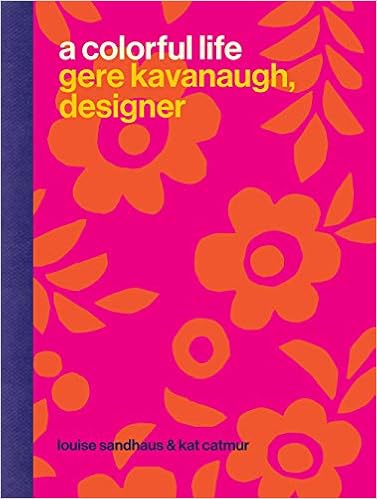
A Colorful Life: Gere Kavanaugh, designer

"The designer Gere Kavanaugh is an irrepressible force of nature who epitomized the craft and folk vibe of the '60s and '70s California design scene and remains a larger-than-life personality today. Raised in Memphis, Tennessee, Kavanaugh became in 1952 only the third woman to earn a degree in Cranbrook Academy of Art's design program. After successful stints as one of GM's so-called Damsels of Design and as director of interiors for Victor Gruen's architecture and planning firm, she opened Gere Kavanaugh/Designs. There, Kavanaugh put her unique stamp on textiles, furniture, toys, graphics, store and restaurant interiors, holiday decor, housewares, and public art—even designing and curating exhibitions. But perhaps her most enduring project has been the joyful, open-ended, ongoing experiment of her own lifestyle and homes, a dream of color and handcraft. Kavanaugh was awarded the AIGA Medal in 2016, recognizing her "prodigious and polymathic approach to design.""

ZIPPED. Space in small Japanese houses

The book is the result of the collective work experience of 33 youths from Montevideo, coordinated by Diego Morera and directed by the author. The meticulous task of selecting, collecting, systematizing and redrawing these 80 house designs subject to extremely strict restrictions not only demonstrates the ability of contemporary Japanese architects to devise small residential programs but also reveals their amazing skills for scale, limit and distance manipulation, and immerses us in the infinite interior.

Finding One's Own Way in Design: Reflections on Narrative Professional Identity

The question of how to find one’s own way touches the life of each of us. This question is closely linked to our identity, especially when something changes in our lives and questions our prevailing view of ourselves.Finding one’s own way illustrates how designers have sought to navigate their life in design. The study builds on individual stories that are viewed through narrative identity research — design entrepreneurs’ and design students’ visual and spoken narratives and creative process reports, recounting some of the most significant experiences that have influenced their life paths. These stories show how one’s ‘own way’ is shaped by different beliefs, obstacles and successes, turning points and creative crises.The research provides novel insights for designers, design students, researchers and educators — indeed anyone who is eager to dive into identity reflection and gain a better understanding of how to both find and create one’s own way in design.

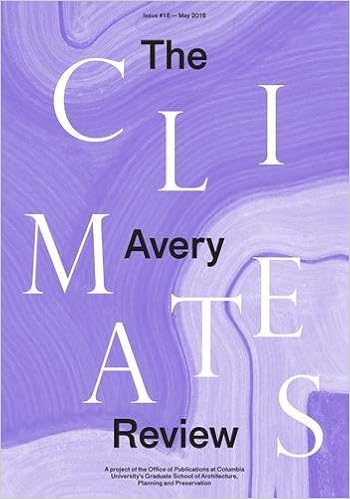
The Avery Review: Climates

The essays in this volume examine what we talk about when we talk about climate, particularly in relation to architecture and its allied fields. How does climate inflect our understanding of human settlement, global migration, spatial violence, and resource extraction? How does climate figure into our conception of what architecture is and does? What are the material and conceptual infrastructures that render climate legible, knowable, and actionable? How do these questions offer new vantage points on the architectural ramifications of climate change, amplifying our understanding of resiliency, sustainability, and ecotechnology? Investigating climatic territories, imaginaries, and visibility, these essays clarify the exigencies of environment through design.

Your Guide to Downtown Denise Scott Brown

The first book to focus exclusively on Denise Scott Brown, Your Guide to Downtown Denise Scott Brown Brown reaches beyond that foundational part of her work. It offers an entirely new way to view her achievements more broadly as an architect, urban planner, theorist, and educator. The book takes readers through her childhood in 1930s South Africa and her education in 1950s England, to her well-known work in photography, her writings and studies, and her work as an architect and urban planner on four continents. Lavishly illustrated, the book features a wealth of previously unpublished material, most of it in full color.